Water Well Service for Midland, Odessa & the Permian Basin
No water, low pressure, or a pump that won’t stop running? Tell us what’s going on and we’ll help you get it fixed.
Midland County · Ector County · Surrounding communities
What’s going on with your well?
No well yet, or need a new one
Not a repair. A new residential, ranch or irrigation well on your property.
Water well services in your area
Water Well Repair
Troubleshooting and repair for an existing well that has stopped performing the way it used to.
Well Pump Repair
Short-cycling, air in the lines, or a pump that runs without producing water.
Well Pump Replacement
When a pump has reached the end of its life, or another repair no longer makes sense.
Water Well Drilling
New residential, ranch and irrigation wells across the Permian Basin.
Pressure Tank Repair
Low or fluctuating pressure, a waterlogged tank, or a failed pressure switch.
Emergency Well Service
No water right now. What to check first, and when to stop troubleshooting.
Water Well Inspection
Buying a property with a well, or checking a system that’s getting on in years.
Not sure what you need?
Describe what you’re seeing in a sentence or two and we’ll work out where it belongs.
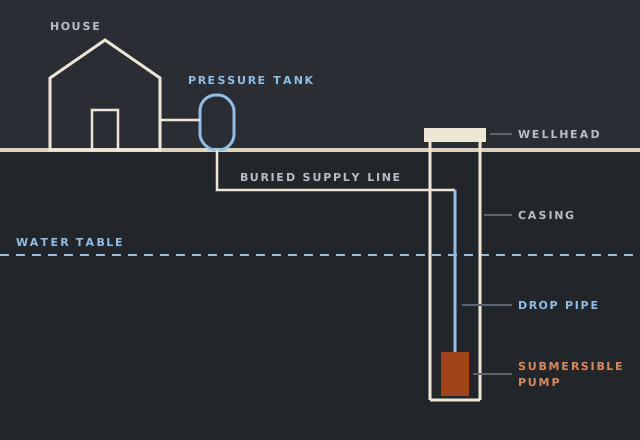
How a water well system actually works
Most well problems come down to four parts. Knowing which one is behaving strangely tells you a great deal before anybody comes out, and makes the phone call much shorter.
Submersible pump
Sits near the bottom of the well and pushes water up the drop pipe. The most common failure point in the whole system.
Drop pipe & casing
Carry water up and keep the borehole open. A leak here often shows up as air spitting from your taps.
Pressure tank
Holds a buffer of pressurised water so the pump isn’t starting every time somebody runs a tap.
Pressure switch
Tells the pump when to start and stop. An inexpensive part that produces expensive-looking symptoms.
Not sure which part is failing?
Describe what you’re seeing and we’ll help you get the right person out to it.
Questions people ask before they call
Drilling is usually quoted by the foot, so depth is the single biggest factor in the total. After that, cost is driven by casing, the pump and motor selected, the pressure system, the electrical work, and how easily equipment can reach the site. A quote without a site visit is a guess.
It depends more on working conditions than on age alone. How much water the household draws, how often the pump starts and stops, water quality, whether the pump was correctly sized for the well, and the stability of the electrical supply all change the answer. A pump that short-cycles wears out much faster than one that runs in longer, steadier cycles.
The deciding factor is usually labour rather than parts. Most of the cost of working on a submersible pump is pulling it out of the well, so once it is already out, replacing a pump that is near the end of its life often costs less over time than putting the old one back. A provider can tell you which situation you are in once they have seen the pump.
Depth varies a great deal from property to property, even between neighbours. A driller working your area sizes a new well from the records of nearby wells and the formation being targeted, which is why a site-specific answer is worth far more than a regional average.
Tell us what’s going on with your well
Describe the problem in a sentence or two. We’ll take it from there.